


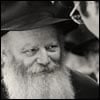
This June 21-22 (3 Tammuz on the Jewish calendar) marks ten years since the passing of the Lubavitcher Rebbe, Rabbi Menachem M. Schneerson, of righteous memory.
Certainly, this milestone will evoke much reflection within the Chabad-Lubavitch community. We can also expect assessments by journalists and academics, both on a global and local scale, on how the movement has fared in the last ten years, what it has achieved, where it is headed, and so on.
But perhaps this milestone anniversary is not really about the story of Lubavitch. Of course, Lubavitch comprises an important piece of the Rebbe's life. But it may still not be "the" story.
I think that the Rebbe's 10th yahrtzeit beckons us to look beyond Lubavitch and to take a deeper and broader look at who the Rebbe himself was, what he stood for, how he acted upon his beliefs, and what in Jewish life today is attributable to his vision.
The lion's share of the Rebbe's time and energies was consumed not by Lubavitch per se, but by klal yisrael, the totality of the Jewish people.
Over the years, many thousands sat in the Rebbe's office at 770 Eastern Parkway for personal audiences with the Rebbe, and were inspired by him to become ambassadors for Torah and Judaism to whatever organization or stream of Judaism they affiliated with, and whatever strata of society they had the potential to impact.
The urgency and optimism he exuded, the breathtaking beauty of his elucidations of lofty Torah concepts, the conviction and certainty with which he presented his positions, the deep-felt belief he had in the power G‑d vested inside each human being — these were but some of the attributes that attracted people to buy into the Rebbe's vision.
There were some who disagreed with him. But many of those very same people are implementing today what he started teaching half a century ago. Throughout the Jewish world today, people are following the course painstakingly set by the Rebbe.
In fact, it is quite possible that, in the Rebbe's view, every single Jew alive today can be considered his successor.


Voice of Elijah Although I did not ever have the opportunity to meet the Rebbe, I have read many of his messages. I have also had the opportunity to hear what those close to him have said. His insight seemed based upon, not simply an understanding of the Torah, but what we should all aspire to be, the emobodiment of the Torah. In particular, I always found his words to reflect the message given to Moses and stated in Deuteronomy 10:12-22. These important words, the forgotten message to the children of Israel, provide the path to the Light. Humans will never stop sinning of their own accord. It is only by learning to love G-d as he instructed, in this passage, that we will achieive the Messianic Age. This, I believe was the message of Rebbe, the voice of Elijah.